Exploring Career Change at 30, 40, or 50: How to Make a Confident Transition.
Thinking about a career change at 30, 40, or 50 is far more common than many people realise — yet it can feel isolating, overwhelming, and even frightening.
You might be asking yourself:
Is it too late to change careers?
What if I have to start again from scratch?
How do I balance financial responsibilities with change?
What if I make the wrong decision?
As a career development practitioner, I work with adults across Australia who feel stuck, burnt out, or unfulfilled — often after years of doing what they thought they should do. The truth is: career change is not a sign of failure. It’s a sign of growth, self-awareness, and readiness for something more aligned.
This blog explores how to navigate a career change in Australia at different life stages, with practical steps to help you move forward confidently — without panic or pressure.
Why Career Change Is So Common at 30, 40, and 50
Career change often aligns with life transitions.
Career Change at 30
At 30, many people:
Feel misaligned with their original career choice
Experience early career burnout
Want more purpose, flexibility, or income growth
Begin reassessing long-term goals
This stage often brings the realisation that potential and satisfaction matter just as much as stability.
Career Change at 40
At 40, career change is often driven by:
Burnout or boredom
Plateaued career progression
Family responsibilities and work–life balance
Desire for more meaningful work
By this stage, people bring deep transferable skills, even if they don’t yet recognise them.
Career Change at 50
At 50, many people reassess:
Longevity and sustainability of their work
Physical and emotional wellbeing
Desire to leave a meaningful legacy
Need for flexibility or phased retirement
Contrary to myth, many employers value the experience, reliability, and insight that mature career changers bring.
This is where professional career counselling becomes invaluable.
The Biggest Barriers to Career Change (and How to Overcome Them)
1. Fear of Starting Over
A common concern is having to “start again.”
In reality:
You are not starting from zero
Skills transfer across industries
Experience compounds — it doesn’t disappear
2. Financial Anxiety
Career change doesn’t always mean quitting immediately.
Options include:
Gradual transitions
Study while working
Side-step roles
Upskilling within your current field
Career change is often a process, not a leap.
3. Confidence and Self-Doubt
Thoughts like “I’m too old” or “I’m not qualified” are incredibly common.
Career counselling helps challenge unhelpful beliefs and replace them with realistic planning and evidence-based guidance.
Understand Why You Want to Change
Before choosing what to change into, it’s crucial to understand why you want change.
Common drivers include:
Career burnout
Values misalignment
Lack of growth
Poor work–life balance
Physical or mental health concerns
Understanding your motivation helps ensure you don’t change roles only to recreate the same dissatisfaction.
Identify Transferable Skills
You likely have more transferable skills than you realise.
These may include:
Communication
Leadership
Problem-solving
Project management
Stakeholder engagement
Training and mentoring
A career development practitioner can help you map these skills to new industries and roles.
Explore Career Options Without Pressure
Career exploration doesn’t require immediate commitment.
Useful exploration strategies:
Informational interviews
Online research
Skills assessments
Short courses or micro-credentials
Career counselling sessions
Address Qualifications and Training
Many career changers worry they’ll need years of retraining.
In reality:
Some roles require minimal upskilling
Experience may substitute formal qualifications
Short courses can bridge gaps
Recognition of Prior Learning (RPL) may apply
Career planning should be strategic — not overwhelming.
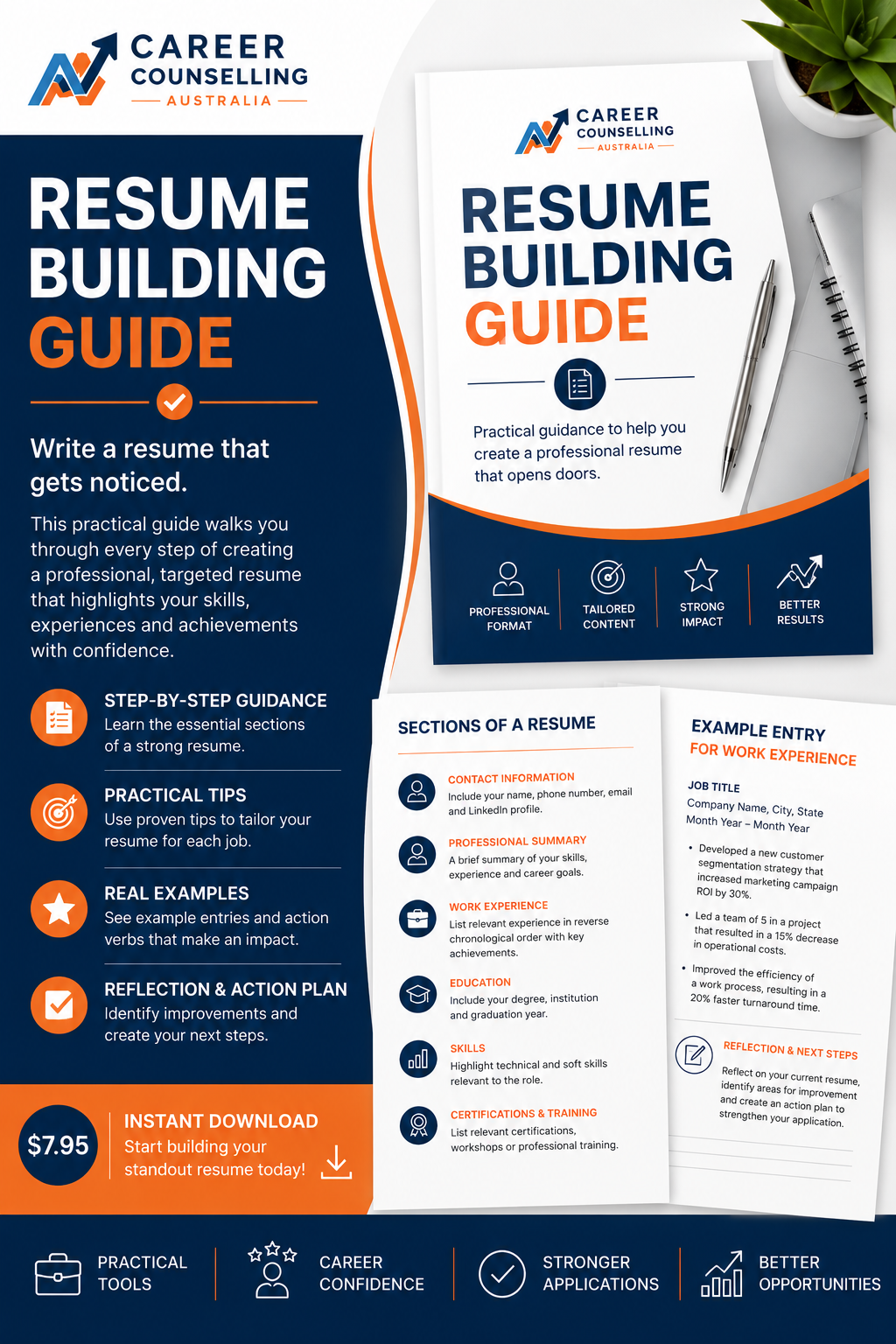
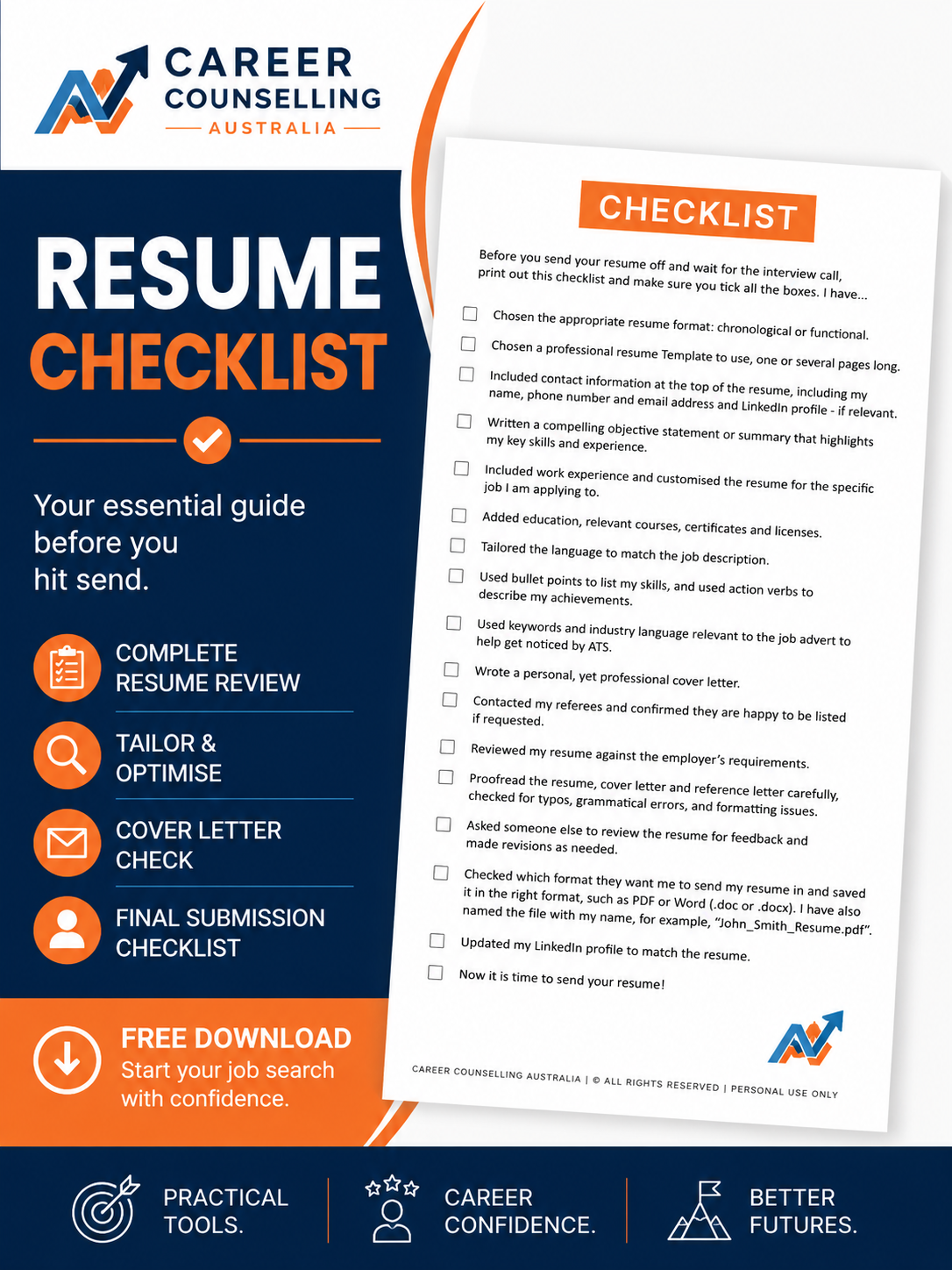
Update Your Resume for a Career Change
Career change resumes require a different approach.
Effective resumes focus on:
Transferable skills
Achievements, not job titles
Relevance to the new role
Clear career narrative
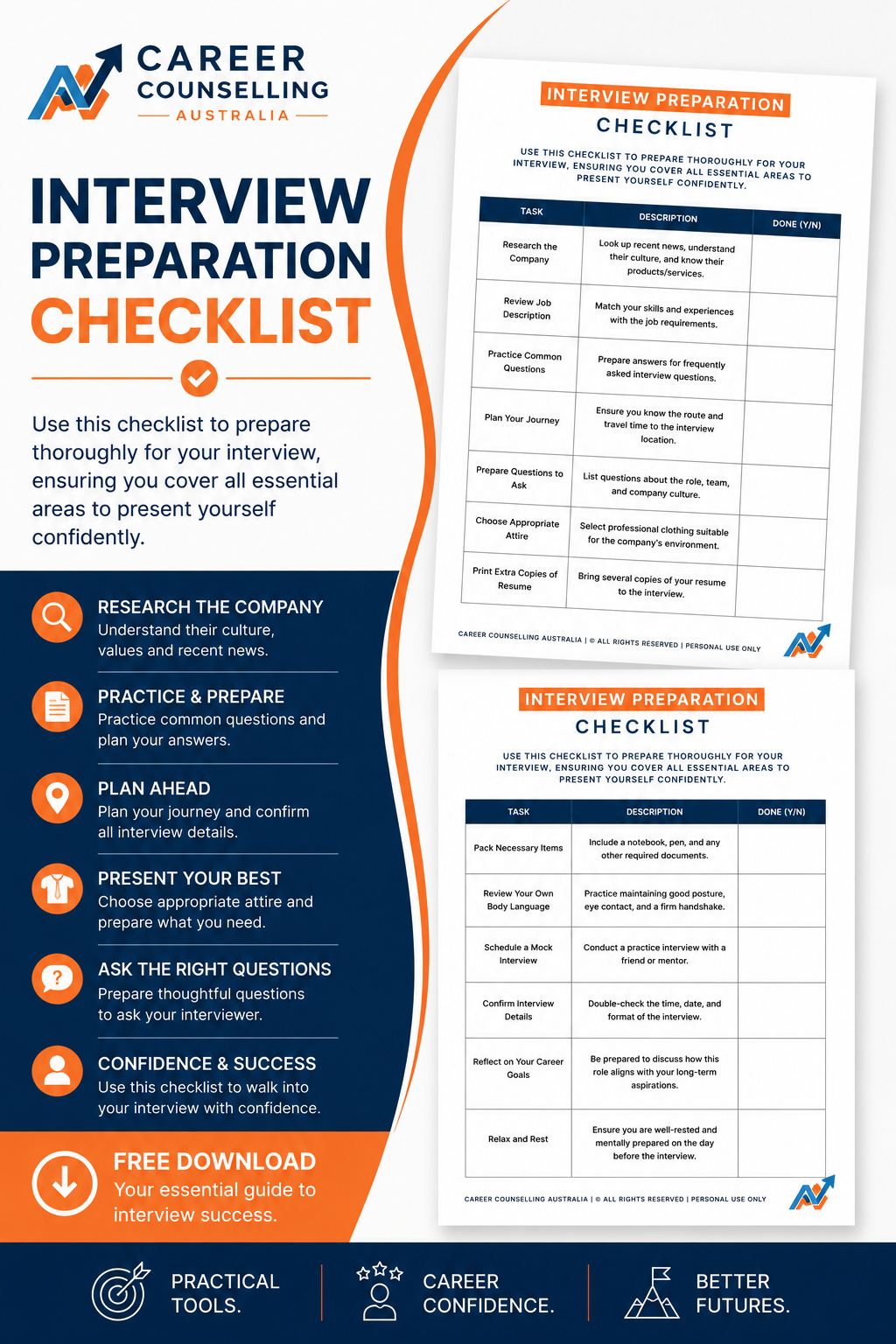
Prepare for Career Change Interviews
Career change interviews often focus on why you’re changing.
Strong interview preparation includes:
Clear motivation
Confidence in transferable skills
Understanding employer needs
Reframing experience positively
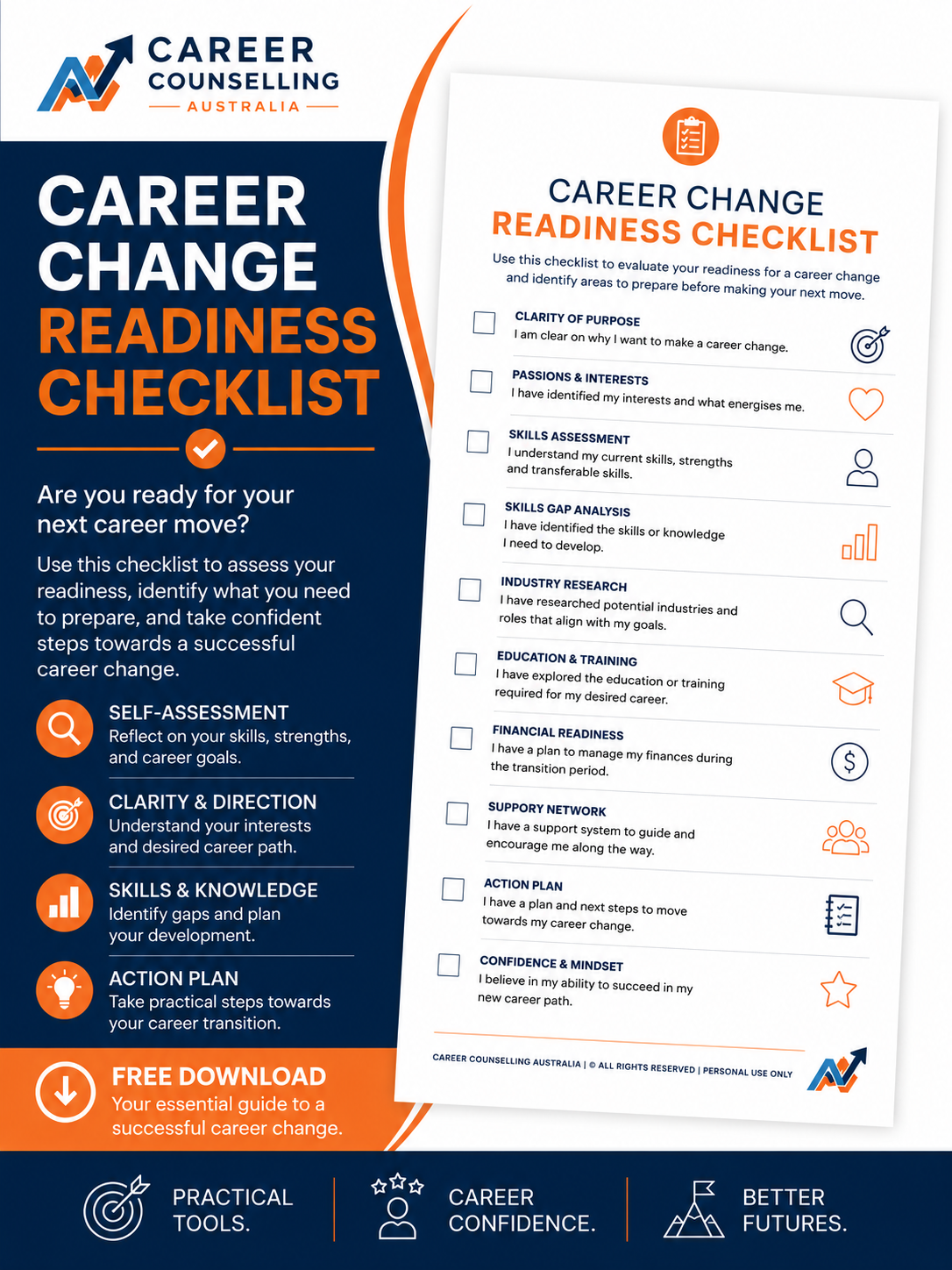
Make a Realistic Transition Plan
Successful career changes are planned — not rushed.
A transition plan may include:
Short-term income stability
Skill development timeline
Networking strategy
Financial planning
Emotional support
This is where structured career planning supports sustainable change.
Manage Career Burnout During Transition
Career change often follows burnout.
Key burnout recovery strategies include:
Setting boundaries
Prioritising wellbeing
Reducing all-or-nothing thinking
Seeking professional support
Burnout doesn’t mean you’re incapable — it means something needs to change.
Remember — There Is No “Too Late”
Some of the most successful career changes happen later in life.
At 30, 40, or 50, you bring:
Experience
Emotional intelligence
Perspective
Resilience
Professional maturity
Employers value people who know themselves and their strengths.
How Career Counselling Supports Career Change at Any Age
Career Counselling Australia provides:
Career change strategy
Skills and strengths identification
Resume and interview support
Career guidance online
After-hours appointments
Whether you’re considering a subtle shift or a complete reinvention, professional guidance removes guesswork and builds confidence.
Final Thoughts: Career Change Is Not a Step Back — It’s a Step Forward
Career change at 30, 40, or 50 is not about undoing the past — it’s about honouring what you’ve learned and choosing what comes next.
With clarity, planning, and the right support, a career change becomes empowering — not terrifying.
You’re not behind.
You’re evolving.
Ready to Explore Your Career Change?
📍 Career Counselling Australia
💻 Online career counselling Australia-wide
🕒 Flexible, after-hours appointments
👩💼 Led by an experienced career development practitioner
Year 12 Subject Selection: How to Make Confident Choices for Your Future.
Choosing Year 12 subjects is one of the most significant decisions students make during their secondary education. It can feel overwhelming—not just for students but for parents as well.
Questions like “Will this subject affect my ATAR?”, “Do I need this for university?” or “What if I change my mind later?” are incredibly common. For many young people, subject selection brings pressure, fear of making the “wrong” choice, and confusion about future pathways.
The good news? There is no single “perfect” combination of subjects — but there is a thoughtful, informed way to make confident choices.
As a career development practitioner, I work closely with students and families across Australia to navigate Year 12 subject selection with clarity, realism, and confidence. This blog will guide you through what matters most, common myths, and how to align subject choices with future options — without unnecessary stress.
Why Year 12 Subject Selection Matters
Year 12 subjects can influence:
University and TAFE entry options
ATAR calculations (where applicable)
Apprenticeship and training pathways
Motivation and well-being in the final year of school
However, subject selection is not a life sentence. Many pathways remain flexible, and there are often multiple ways to reach the same goal.
Professional school career counselling helps students understand both the impact and the flexibility of their choices.
Common Myths About Year 12 Subject Selection
Before diving into how to choose subjects, it’s important to clear up some misconceptions.
Myth 1: “Harder Subjects Always Lead to Better Outcomes”
Scaling is often misunderstood. Choosing a subject, you dislike or struggle with can negatively affect results — even if it scales well.
Myth 2: “I Need to Know My Exact Career Now”
Very few adults work in the job they imagined at 17. Subject choices should keep options open, not lock students in.
Myth 3: “One Wrong Choice Will Ruin My Future”
Pathways today are more flexible than ever. Bridging courses, alternative entry, and pathway programs exist across Australia.
This is why career guidance online is so valuable — it replaces fear with facts.
Start With Strengths and Interests
The strongest foundation for subject selection is self-awareness.
Students should ask:
Which subjects do I enjoy?
Where do I perform best?
What learning style suits me?
Which subjects motivate me to engage?
Enjoyment and confidence often translate into stronger performance, particularly in Year 12 when workload increases.
Understand Prerequisites — Without Panic
Some university courses require specific prerequisites, such as:
English (almost always required)
Mathematics (for science, engineering, commerce)
Chemistry or Physics (for health and science courses)
However:
Not all courses require prerequisites
Many universities offer alternative entry or bridging options
TAFE and VET pathways often provide flexibility
Subject selection should account for prerequisites without unnecessarily narrowing options.
Consider ATAR and Non-ATAR Pathways
While ATAR is one pathway, it is not the only one.
Other pathways include:
VET certificates
TAFE diplomas
Apprenticeships and traineeships
University pathway programs
Portfolio and interview-based entry
Year 12 pathways should be explored broadly — not just through an ATAR lens.
Balance Challenge and Manageability
Year 12 is demanding. A balanced subject load matters.
Students should consider:
Homework and assessment demands
External commitments (work, sport, family)
Stress tolerance and wellbeing
Burnout can impact results just as much as subject difficulty.
This is where school career counselling supports realistic, sustainable decisions.
Keep Doors Open Where Possible
If a student is unsure about their future direction, subject choices should aim to:
Maintain flexibility
Include foundational subjects
Avoid unnecessary narrowing
For example:
Including English and Maths often keeps options broader
Combining academic and applied subjects can provide balance
Career planning is about options, not pressure.
What Parents Can Do to Support the Process
Parents play a critical role — and often feel just as anxious.
Helpful parent support includes:
Listening without judgement
Encouraging exploration rather than perfection
Avoiding comparisons with other students
Seeking professional advice when unsure
The Role of Career Counselling in Subject Selection
Professional career counselling, helps students:
Understand how subjects link to pathways
Explore interests and strengths
Reduce anxiety and uncertainty
Develop confidence in their decisions
Create a realistic post-school plan
Career counselling is not about telling students what to choose — it’s about empowering them to decide with confidence.
What If a Student Changes Their Mind Later?
This is normal — and expected.
If interests shift:
Bridging subjects can fill gaps
TAFE and pathway programs can provide entry
Many careers don’t require specific Year 12 subjects
Career decisions are iterative, not final.
Subject Selection Is About More Than Careers
While future pathways matter, Year 12 is also about:
Confidence
Skill development
Resilience
Learning how to learn
Subjects should support growth — not just outcomes.
Practical Tips for Confident Subject Selection
✔ Attend subject information nights
✔ Speak with teachers about workload and expectations
✔ Research prerequisites calmly
✔ Consider wellbeing and balance
✔ Seek professional career guidance
Final Thoughts: Confidence Comes From Clarity, Not Certainty
Year 12 subject selection doesn’t require absolute certainty — it requires informed decision-making.
With the right information, support, and reflection, students can choose subjects that align with who they are now, while keeping future options open.
Confidence grows when students understand their choices — not when they feel compelled to make them.
Need Support with Year 12 Subject Selection?
Career Counselling Australia provides:
School career counselling
Year 12 pathway planning
Subject selection support
Parent–student consultations
📍 Based in Melbourne
💻 Available via online Australia-wide
🕒 After-hours appointments available for families
Overcoming Career Burnout: Strategies to Re-energise Your Work Life
Burnout doesn’t happen overnight.
It builds quietly — through long hours, constant pressure, lack of recognition, unclear direction, or feeling stuck in a role that no longer fits. By the time many people seek help, they’re exhausted, disengaged, and questioning whether they can keep going.
If you’re feeling emotionally drained, unmotivated, or disconnected from your work, you’re not alone. Career burnout is increasingly common across Australia, affecting professionals, parents, students, and job seekers alike.
As a career development practitioner, I work with many clients who initially believe they “just need a holiday,” when in reality, something deeper needs attention. Burnout is often a signal — not a failure — that your career needs recalibration.
This blog explores what career burnout really is, why it happens, and practical strategies to help you re-energise your work life in a sustainable way.
What Is Career Burnout?
Career burnout is a state of physical, emotional, and mental exhaustion caused by prolonged work-related stress.
It often includes:
Chronic fatigue
Loss of motivation
Reduced performance
Cynicism or detachment
Feeling stuck or trapped
Anxiety or low mood related to work
Burnout can affect anyone — regardless of age, industry, or seniority. It’s particularly common among:
People in caring or people-focused roles
Parents juggling work and family
Professionals with long tenure
Career changers feeling uncertain
Students navigating high expectations
Common Signs You May Be Experiencing Career Burnout
Burnout doesn’t always look dramatic. Often, it shows up subtly.
You may be experiencing career burnout if:
You dread starting the workweek
Tasks feel harder than they used to
You feel emotionally disconnected from your role
You’re constantly tired, even after rest
Your confidence has dropped
You fantasise about quitting without a plan
These signs don’t mean you’re failing — they mean something needs to change.
Why Career Burnout Is So Common Right Now
Several factors have contributed to rising burnout levels across Australia:
Increased Workload and Expectations
Many roles have expanded without corresponding support, leading to ongoing pressure.
Blurred Work-Life Boundaries
Remote and hybrid work can make it harder to switch off.
Career Misalignment
People often outgrow roles that once suited them.
Lack of Progression or Purpose
Feeling stagnant can be just as draining as being overworked.
Life Stage Changes
Parenthood, health changes, or caring responsibilities can dramatically shift priorities.
Acknowledge Burnout Without Judgement
The first step to overcoming burnout is recognising it — without self-criticism.
Burnout is not:
A personal weakness
A lack of resilience
A failure to cope
It is often a rational response to sustained pressure or misalignment.
Separate “This Job” From “My Career”
One of the most important mindset shifts is understanding that:
Feeling burned out does not mean your entire career is wrong
It may mean your current role, environment, or conditions are no longer suitable
Many people assume the only solution is quitting — but that’s not always necessary.
A career counsellors can help you explore:
Role redesign
Reduced hours
Boundary setting
Internal transitions
Strategic career change
Reconnect With What Matters to You
Burnout often occurs when your work no longer aligns with your values.
Ask yourself:
What originally attracted me to this field?
What parts of my work still energise me?
What drains me the most?
What do I want my work to support in my life right now?
Conduct a Career Health Check
Think of this as a “career audit.”
A career health check may explore:
Skills you enjoy using vs. those that drain you
Work environments where you thrive
Workload sustainability
Growth and learning opportunities
Long-term lifestyle fit
This structured reflection is a core component of professional career guidance.
Adjust Before You Abandon
Not all burnout requires a major career change.
Sometimes small, strategic changes can make a significant difference:
Adjusting hours or workload
Clarifying expectations with management
Delegating or renegotiating responsibilities
Moving into a different team or role
Accessing training or upskilling
When Career Change Is the Right Path
For some, burnout signals a deeper shift is needed.
This is particularly true if:
Your values no longer align with your industry
Your role conflicts with your health or family needs
You feel disconnected from any sense of purpose
You’ve already tried adjustments without improvement
Career change does not mean starting from scratch.
A career change Strategy focuses on:
Transferable skills
Gradual transitions
Risk management
Confidence rebuilding
Career change at 30, 40, or 50 is not only possible — it’s increasingly common.
Rebuild Energy Through Small Wins
Burnout recovery is not about an overnight transformation.
It’s about rebuilding momentum through:
Achievable goals
Skill development
Supportive conversations
Clarifying next steps
Strengthen Confidence and Identity
Burnout often erodes confidence.
You may begin to doubt:
Your abilities
Your value
Your employability
This is where job search support, resume guidance, and interview coaching can help reframe your experience and strengths.
Prioritise Sustainable Career Design
A sustainable career supports:
Your wellbeing
Your family and lifestyle
Your long-term goals
Your mental and physical health
How Career Counselling Can Help With Burnout
Professional career counselling can help you:
Identify the root causes of burnout
Clarify career direction
Explore realistic options
Develop a plan that fits your life
Regain confidence and motivation
Importantly, it provides space to think — something many burned-out people haven’t had in a long time.
Final Thoughts: Burnout Is a Signal, Not an Endpoint
Career burnout is not the end of your working life — it’s often the beginning of a more intentional one.
With the right support, reflection, and planning, it’s possible to move from exhaustion to clarity, from survival to purpose.
Your career should support your life — not consume it.
Need Support Navigating Career Burnout?
Career Counselling Australia offers:
Career counselling and coaching
Career change support
Job search support
Resume and interview guidance
📍 Based in Melbourne
💻 Available via online Australia-wide
🕒 Flexible after-hours appointments available
Resume Writing Tips: How to Stand Out to Employers in 2026
In today’s competitive job market, a strong resume is no longer just a summary of your work history — it’s a strategic marketing document.
By 2026, Australian employers will be receiving hundreds of applications for a single role. Many resumes are scanned by Applicant Tracking Systems (ATS) before a human reviewer sees them, and recruiters typically spend 6–8 seconds reviewing each application.
If you’re applying for jobs and not hearing back, the issue is often not your experience — it’s how that experience is being presented.
As a career development practitioner, I regularly support highly capable, experienced, and motivated clients who are overlooked due to outdated or unfocused resumes. This blog shares practical, current resume writing tips to help you stand out to employers in 2026 — whether you’re changing careers, returning to work, or aiming for your next step.
Why Resume Expectations Have Changed
The Australian job market has evolved rapidly over the past few years.
Employers now expect resumes that:
Clearly align with the role
Demonstrate impact, not just duties
Highlight transferable skills
Are concise, relevant, and easy to scan
Match selection criteria and keywords
A generic resume is no longer effective.
Professional resume help focuses on tailoring your resume to each opportunity while remaining efficient and sustainable for job seekers.
Understand What Employers Are Really Looking For
Before writing or updating your resume, it’s essential to understand the employer’s perspective.
Most recruiters are asking:
Can this person do the job?
Will they add value quickly?
Do their skills align with our needs?
Are they a good cultural fit?
Your resume should answer these questions clearly and quickly.
Choose the Right Resume Structure for 2026
The most effective resume format in 2026 is:
Clean
Professional
Easy to scan
ATS-friendly
For most job seekers, this means a reverse-chronological resume with a strong professional summary at the top.
Recommended Resume Sections:
Header (name, contact details, LinkedIn)
Professional summary
Key skills
Employment history
Education and qualifications
Additional relevant sections (if applicable)
Avoid graphics, tables, photos, and overly creative layouts unless applying for a design-specific role.
Write a Strong Professional Summary
Your professional summary is one of the most important sections of your resume.
In 3–4 lines, it should:
Clearly state who you are professionally
Highlight your core strengths
Indicate the type of roles you’re targeting
Example:
Experienced customer service and administration professional with over 8 years of experience supporting high-volume environments. Strong communication, problem-solving, and stakeholder engagement skills, with a proven ability to adapt across industries.
This section is especially important for:
Career change candidates
Return-to-work parents
Mature-age job seekers
Focus on Achievements, Not Just Duties
One of the biggest resume mistakes is listing responsibilities instead of results.
Employers want to see impact.
Instead of:
“Responsible for customer service”
Try:
“Provided customer service to an average of 60+ clients per day, resolving enquiries efficiently and contributing to high customer satisfaction ratings.”
Where possible, include:
Numbers
Outcomes
Improvements
Results
This approach is a key part of professional resume help Australia-wide.
Use Keywords Strategically
In 2026, keyword optimisation is essential.
Many employers use Applicant Tracking Systems that scan resumes for:
Job titles
Skills
Qualifications
Industry terms
To optimise your resume:
Review the job description carefully
Mirror relevant language naturally
Avoid keyword stuffing
Ensure your resume still reads clearly
Highlight Transferable Skills (Especially for Career Change)
If you’re considering a career change, your resume needs to clearly show how your existing skills apply to a new role or industry.
Transferable skills may include:
Communication
Leadership
Organisation
Training and mentoring
Problem-solving
Time management
These skills should be:
Clearly named
Supported by examples
Placed prominently
Career-change resumes often benefit from professional support to build confidence and clarity.
Tailor Your Resume for Each Application
One of the most effective ways to stand out is tailoring.
This does not mean rewriting your resume from scratch each time.
It means:
Adjusting your professional summary
Reordering skills to match the role
Highlighting the most relevant experience
Tailored resumes show effort, alignment, and genuine interest — all qualities employers value.
Address Employment Gaps with Confidence
Employment gaps are common and increasingly accepted — especially following the disruptions of recent years.
The key is:
Not hiding gaps
Not over-explaining
Focusing on skills gained
Gaps may include:
Parenting or caring responsibilities
Study or retraining
Health or well-being
Career transitions
Keep It Concise and Relevant
In 2026, longer is not better.
General guidelines:
1–2 pages for most roles
Up to 3 pages for senior or specialist roles
Remove:
Irrelevant roles from early career
Outdated qualifications
Excessive detail
A focused resume respects the recruiter’s time and increases your chances of progressing.
Pair Your Resume with Interview Preparation
A strong resume opens the door — but interviews close the deal.
Many clients benefit from combining resume support with interview coaching in Australia, ensuring:
Confidence in explaining experience
Clear examples using the STAR method
Strong responses to career change questions
This integrated approach improves outcomes significantly.
When to Seek Professional Resume Support
You may benefit from professional resume help Australia-wide if:
You’re not receiving interview invitations
You’re changing careers or industries
You haven’t updated your resume in years
You feel unsure how to sell your experience
You want confidence that your resume reflects current standards
Final Thoughts: Your Resume Is an Investment in Your Future
A resume is not just a document — it’s a tool that represents your value, experience, and potential.
In 2026, standing out requires clarity, strategy, and alignment with employer expectations.
With the right guidance, your resume can open doors to opportunities that truly fit your skills, values, and goals.
Need Support with Your Resume or Job Search?
Career Counselling Australia offers:
Professional resume writing and review
Career change support
Interview coaching
Job search support
📍 Based in Melbourne
💻 Available via online Australia-wide
Navigating a Career Change at 30, 40, or 50: Practical Steps for a Smooth Transition.
Thinking about a career change can feel both exciting and terrifying.
By March, many people across Australia find themselves questioning their work more deeply. The new year momentum has settled, routines are firmly back in place, and the reality of another year in an unfulfilling role starts to feel heavy.
If you’re considering a career change at 30, 40, or 50, you are not alone. In fact, this is one of the most common reasons people seek career counselling in Australia.
Despite outdated career myths, changing direction at any stage of life is not a failure; it’s often a sign of growth, self-awareness, and evolving priorities.
This blog explores why career change looks different at different life stages and outlines practical, realistic steps to help you transition with confidence and clarity.
Why Career Change Is So Common Now
The idea of staying in one career for life no longer reflects reality.
Today’s workforce is shaped by:
Rapid industry change
Technological advancements
Shifting job security
Increased focus on well-being and work–life balance
Longer working lives
As a career development practitioner, I work with clients who are highly capable but feel misaligned, burnt out, or underutilised in their current roles. Many say:
“I thought I’d feel more settled by now.”
Career dissatisfaction isn’t about age — it’s about alignment between who you are now and what your work demands.
Career Change at 30: Refining Direction
A career change in your 30s often comes from clarity rather than crisis.
Common drivers include:
Realising your first career choice doesn’t fit long-term
Wanting more purpose or growth
Seeking flexibility around family or lifestyle
Feeling boxed into a role that no longer challenges you
At this stage, people often have:
Solid transferable skills
Energy to retrain or pivot
Fewer long-term financial constraints
Practical focus at 30:
Identifying transferable skills
Exploring industries with growth potential
Upskilling strategically rather than starting over
Gaining clarity through career guidance online
Career Change at 40: Balancing Security and Fulfilment
A career change at 40 often carries more emotional and practical weight.
People in this stage commonly juggle:
Financial responsibilities
Family commitments
Leadership or senior roles
Fear of “starting again”
Clients often say:
“I can’t afford to make the wrong move.”
The good news? A career change at 40 is rarely about starting from scratch. It’s about repositioning experience.
Practical focus at 40:
Translating experience into new contexts
Identifying adjacent roles or industries
Managing risk through staged transitions
Updating resumes with professional resume help Australia-wide
Career Change at 50: Redefining Success
A career change at 50 is increasingly common — and increasingly successful.
Motivations often include:
Burnout after long tenure
Desire for more meaningful or flexible work
Health or lifestyle considerations
Preparing for sustainable working years ahead
At this stage, people bring:
Depth of experience
Strong professional identity
High-value transferable skills
The challenge is often confidence, not capability.
Practical focus at 50:
Reframing experience as an asset
Challenging age-related career myths
Exploring consulting, mentoring, or portfolio careers
Receiving tailored job search support in Australia
Career counselling provides a supportive, non-judgmental space to redefine success on your terms.
Get Clear on Why You Want to Change
Before making any move, clarity is essential.
Ask yourself:
What specifically isn’t working anymore?
Is this burnout, misalignment, or both?
What do I want more of in my working life?
What am I no longer willing to compromise on?
Identify and Own Your Transferable Skills
One of the most significant barriers to career change is undervaluing existing skills.
Transferable skills may include:
Leadership and people management
Communication and stakeholder engagement
Problem-solving and decision-making
Training, mentoring, or coaching
Project and change management
These skills apply across industries — but they need to be articulated clearly.
Professional resume help and interview coaching ensure your experience is positioned confidently for new opportunities.
Research Without Pressure
A career change does not require immediate action.
Exploration may include:
Researching roles and industries
Informational interviews
Reviewing labour market trends
Considering retraining or micro-credentials
Create a Staged Transition Plan
The smoothest career changes are rarely abrupt.
A staged plan may include:
Remaining in your current role while upskilling
Trialling a new field through part-time work or study
Building networks before applying
Testing options before committing
This approach reduces risk and increases confidence.
Prepare for the Emotional Side of Change
Career change isn’t just practical — it’s emotional.
Common feelings include:
Fear of judgment
Loss of identity
Imposter syndrome
Grief for a role you once enjoyed
When Career Counselling Makes the Biggest Difference
Career counselling is particularly valuable if you:
Feel stuck but unsure why
Want change but fear the consequences
Have multiple ideas and need clarity
Are experiencing career burnout
Want structured, realistic guidance
Final Thoughts: It’s Not Too Late — It’s the Right Time
Career change at 30, 40, or 50 is not about being behind.
It’s about being intentional.
Your experience matters. Your well-being matters. And your career should evolve alongside you.
With the right guidance, planning, and support, a career change doesn’t have to feel overwhelming — it can feel empowering.
Ready to Explore Your Next Career Chapter?
Career Counselling Australia provides flexible, after-hours online career counselling and coaching for adults across Australia.
Services include:
Career change support
Career planning and exploration
Resume writing and interview coaching
Job search support
Based in Melbourne. Available Australia-wide.
Exploring Career Options After High School: Tips for Year 12 Students
exploring-career-options-after-high-school-year-12-australia.jpg
For many Year 12 students, February is when reality sets in.
The excitement of finishing school has faded, results have been received, and the question becomes very real:
“What do I do now?”
Whether you’re feeling confident, confused, relieved, or overwhelmed, this stage of life comes with pressure — often from multiple directions. Expectations from family, friends, school, and even yourself can make career decisions feel heavier than they need to be.
As a career development practitioner providing career counselling across Australia, I work with Year 12 students every year who feel unsure about their next step. The good news? There is no single “right” pathway — and you don’t need to have everything figured out immediately.
This blog is designed to help Year 12 students (and their families) explore career options after high school with clarity, confidence, and realistic expectations.
Why February Is a Key Month for Career Decisions
February is a transition month.
Students are:
Starting university or TAFE
Considering apprenticeships or traineeships
Entering the workforce
Reconsidering offers they’ve accepted
Feeling uncertain or questioning their choices
Search trends show a spike in:
School career counselling
Year 12 pathways
Career planning Australia
Career guidance online
This clearly indicates that students are looking for reassurance and structure.
Feeling unsure at this stage is normal — and seeking support is a smart step, not a sign of failure.
First Things First: You Are Not Behind
One of the biggest misconceptions about finishing Year 12 is the belief that you must:
Know exactly what career you want
Choose the “perfect” course
Stick with one decision for life
In reality, most careers today are non-linear. People change roles, industries, and directions multiple times throughout their working lives.
Career counselling is not about locking you into one path — it’s about helping you make informed decisions based on who you are right now.
Understanding Your Post-School Options
After Year 12, students in Australia typically explore one or more of the following pathways:
University
Ideal for students interested in academic study, professional careers, or research-based fields.
TAFE and Vocational Education
Practical, skills-based training aligned with industry needs.
Apprenticeships and Traineeships
Earn while you learn, gaining nationally recognised qualifications.
Employment
Full-time, part-time, or casual work to build experience and confidence.
Gap Year
A structured break to work, volunteer, or explore interests.
There is no hierarchy between these options. A career counsellor helps students identify the pathway that best aligns with their interests, strengths, learning style, and long-term goals.
Understand Yourself Before Choosing a Pathway
Before choosing a course or job, it’s essential to reflect on:
Your interests
Your strengths
Your values
How do you like to learn
What motivates you
Career counselling often begins with guided reflection, assessments, and conversations that help students identify patterns and preferences.
This process supports:
Better decision-making
Increased confidence
Reduced anxiety
More realistic expectations
Career decisions should start with self-awareness, not pressure.
Separate “Expectation” From “Interest”
Many students feel pulled toward pathways because:
Friends are doing it
Family expect it
It feels like the “safe” choice
However, choosing a pathway solely based on expectations often leads to disengagement or later course changes.
In career counselling, students are encouraged to ask:
Does this pathway genuinely interest me?
Can I see myself enjoying the day-to-day reality?
Am I choosing this for me, or for others?
Career satisfaction comes from alignment — not comparison.
Explore Career Options Broadly
Career exploration doesn’t mean choosing one job title.
It means:
Researching industries
Understanding roles within those industries
Learning about required skills and pathways
Talking to people in different fields
Students often discover that:
One qualification can lead to many roles
Careers evolve over time
Skills are transferable
This is where career guidance online and structured career planning become invaluable.
Consider Alternative and Flexible Pathways
Many successful careers don’t follow a traditional route.
Options may include:
Starting at TAFE and transitioning to university
Completing a certificate while working
Changing courses after the first semester
Taking time to gain work experience
Get Support with Applications and Planning
Practical support can significantly reduce stress.
Career counselling services often include:
Course and pathway guidance
Resume help Australia-wide
Interview preparation
Job search support
Goal setting and planning
Students entering the workforce benefit from job-search support, helping them feel prepared and confident in their applications and interviews.
Supporting Student Wellbeing During Career Decisions
Career decisions can impact:
Confidence
Mental health
Family relationships
A safe, nonjudgmental space is essential—especially for students who feel pressure or uncertainty.
Professional school career counselling supports students to:
Make informed decisions
Build resilience
Understand that change is okay
Career counselling is not about telling students what to do — it’s about empowering them to make choices they understand and feel confident about.
What Parents and Families Should Know
Parents want the best for their children — but support is most effective when it’s balanced.
Helpful support includes:
Listening without judgment
Encouraging exploration
Avoiding comparisons
Seeking professional guidance when needed
Working with a career development practitioner helps families navigate conversations about expectations, alternatives, and long-term planning.
Why Career Counselling Helps Year 12 Students
Career counselling provides:
Clarity in a time of uncertainty
Evidence-based guidance
Practical next steps
Confidence-building support
With career counselling, students can access support after hours, without disrupting their study or work commitments.
Career counselling is an investment in confidence, clarity, and long-term wellbeing.
Final Thoughts: Your Pathway Is Yours
There is no deadline for success.
Your first step after Year 12 does not define your entire future — but making an informed decision can shape a more positive start.
Career exploration is a process, not a one-time choice.
With the proper guidance and support, students can move forward with confidence, curiosity, and a clearer sense of direction.
Career Support for Year 12 Students
Career Counselling Australia provides flexible, after-hours online career counselling for students and families across Australia.
Services include:
Career pathway planning
Course and training guidance
Interview preparation
Based in Melbourne. Available Australia-wide.
Feeling Stuck in Your Career? How to Reset and Plan Your Next Move in the New Year.
Career Counselling Australia – resetting your career, planning your next move, and overcoming career burnout in the New Year.
The start of a new year often brings a mix of hope, pressure, and quiet reflection. While others talk about fresh starts and big goals, you might be sitting with a lingering question:
“Why do I still feel stuck in my career?”
If that sounds familiar, you’re not alone. January is one of the busiest times of the year for career counselling in Australia, as people reassess their work, their wellbeing, and their future. Whether you’re experiencing burnout, questioning your direction, or feeling disconnected from your job, the new year offers a powerful opportunity to pause, reset, and plan your next move with intention.
As a career development practitioner working with clients across Australia, I see this pattern every January: capable, motivated people who know something needs to change — but aren’t sure where to begin.
This blog will help you:
Understand why feeling stuck is so common
Identify what’s really holding you back
Reset your mindset after career burnout or dissatisfaction
Create a practical, achievable career plan for the year ahead
Know when and how a career counsellor in Australia can help
Why So Many People Feel Stuck in Their Career
Feeling stuck doesn’t mean you’ve failed or made the wrong choices. In fact, it’s often a sign of growth.
Common reasons people seek career guidance online in January include:
Career burnout after a demanding year
Staying in a role for security, not satisfaction
Long tenure in the same role with limited progression
A mismatch between values and workplace culture
Returning to work after parenting, illness, or injury
Wanting a career change at 30, 40, or 50, but feeling unsure or overwhelmed
For many, the issue isn’t a lack of ability — it’s a lack of clarity.
Without structured career planning in Australia, it’s easy to stay in roles that no longer fit simply because they’re familiar.
Name the “Stuck”
Before you can move forward, you need to understand why you feel stuck.
Ask yourself:
Am I bored, burnt out, or undervalued?
Do I feel anxious or flat when I think about work?
Am I staying because it’s comfortable or because it aligns with my goals?
What would I change if fear or finances weren’t a factor?
Clients seeking online career counselling in Australia often discover that what they’re really stuck in isn’t a job — it’s a pattern. For example:
Saying yes to roles that don’t align with strengths
Downplaying transferable skills
Avoiding change due to confidence or age concerns
Carrying outdated beliefs about success or stability
Naming the problem is the first step toward changing it.
Reflect on the Career You’ve Already Built
When people consider a career change in Australia, they often assume they’re starting from scratch. In reality, most career changes are transitions, not restarts.
Take time to reflect on:
Skills you use daily (communication, leadership, organisation, problem-solving)
Roles or tasks that energise you
Feedback you consistently receive from others
Achievements you’ve minimised or forgotten
This is where working with a career counsellor in Melbourne or online can be especially valuable. A trained professional helps you identify patterns, strengths, and options you may not see on your own.
Your experience still counts — even if your direction is changing.
Address Burnout Before Planning the Future
Career burnout is one of the most searched career-related topics in January, and for good reason.
Burnout can look like:
Exhaustion that doesn’t improve with time off
Feeling disengaged or cynical about work
Difficulty concentrating or making decisions
Loss of confidence or motivation
Planning a career change while burnt out is like trying to plan a trip when you’re already exhausted. The goal isn’t to push harder — it’s to reset.
A career development practitioner will often start with:
Reducing pressure and unrealistic expectations
Reframing success and productivity
Identifying boundaries and support systems
Helping clients regain confidence before making decisions
Career clarity comes more easily when you’re regulated, supported, and realistic about your capacity.
Get Clear on What You Want Now
What you wanted at 22 may not suit you at 35, 45, or 55 — and that’s normal.
Effective career counselling Australia-wide focuses on your current season of life, including:
Family responsibilities
Health and energy levels
Financial priorities
Lifestyle and flexibility needs
Ask yourself:
What do I need from work right now?
What am I no longer willing to tolerate?
What does a “good week” look like for me?
How important are flexibility, purpose, income, or growth?
This step is especially important for:
Parents returning to work
Professionals seeking a career change at 40 or 50
Individuals re-entering the workforce after illness or injury
Career planning should support your life — not compete with it.
Explore Options Without Pressure
Many people delay career decisions because they feel they need an immediate answer.
You don’t.
Exploration can include:
Researching roles that align with your strengths
Talking to people in industries of interest
Reviewing training or upskilling options
Updating your resume to reflect transferable skills
Support such as resume help in Australia or interview coaching Australia-wide can make this process less overwhelming and more strategic.
For students and families, this stage may also include school career counselling, Year 12 pathways, apprenticeships, or tertiary planning — all of which benefit from structured guidance.
Create a Realistic Career Plan for the Year Ahead
A good career plan isn’t rigid — it’s flexible and achievable.
Your plan might include:
Short-term goals (next 3 months)
Medium-term goals (6–12 months)
Skills or experience to build
Support you need along the way
An Australia-based career counsellor can help you break this down into manageable steps, ensuring momentum without overwhelm.
Career progress doesn’t come from one big decision — it comes from aligned action over time.
Why Career Counselling Can Make a Difference
Working with a career counsellor provides:
Objective, professional guidance
Evidence-based tools and frameworks
Confidence-building and accountability
Personalised strategies based on your goals
Whether you’re navigating a career change in Australia, seeking job search support Australia-wide, or simply wanting clarity, career counselling offers structure in a time that often feels uncertain.
Importantly, Career Counselling Australia means you can access support after hours, from anywhere — making it practical for working parents, students, and professionals.
Final Thoughts: You’re Not Behind — You’re Reassessing
Feeling stuck doesn’t mean you’re failing. It often means you’re ready for something different.
January is not about reinventing yourself overnight. It’s about giving yourself permission to pause, reflect, and plan with intention.
With the proper support, clarity, and guidance, your next career move doesn’t have to feel overwhelming — it can feel grounded, informed, and achievable.
How to Get the Best Out of University Open Days
Your guide to making wise choices for next year and beyond
If you’re in Year 12 and planning to head to university next year, open days are one of the most valuable tools you have for making informed decisions. They’re your chance to explore campuses, ask questions, meet lecturers, and get a feel for where you’ll be spending the next few years.
With VTAC applications now open (or opening soon), it’s more important than ever to attend open days with a purpose. Here’s how to make sure you’re using your time wisely and getting the answers you need to build a strong preference list.
Before the Day: Get Clear on What You’re Looking For
Ask yourself:
What courses am I seriously considering?
What’s important to me? location, campus size, facilities, reputation, support services?
Do I want to study full-time, part-time, or flexible/online?
Do I need to relocate or stay local?
Then, check each university’s open day schedule online and plan your day around the courses and sessions you want to attend. Some unis require registration for events or tours, so don’t leave it to the last minute.
On the Day: What to Focus On
Attend Course Info Sessions
These are essential. You’ll hear from lecturers and current students about the course content, structure, majors/specialisations, assessments, and career pathways. Be sure to ask:
What subjects are covered in the first year?
Are there industry placements or internships?
What are the job outcomes or graduate pathways?
Compare Course Entry Requirements
Take note of ATAR requirements, prerequisites (e.g., specific subjects), and alternative entry pathways. Do some courses offer early entry or guaranteed ATARs? This could shape how you rank your VTAC preferences.
Check Out the Vibe
The best university for you isn't always the one with the biggest name. It’s the one where you feel comfortable and supported. Ask yourself:
Can I see myself studying here?
Do I feel safe and welcomed?
What are the student support services like?
Ask About Scholarships and SEAS
Many universities offer scholarships based on financial need, academic achievement, leadership, or community involvement. Open days are a great time to ask:
What scholarships are available?
How do I apply?
When are the deadlines?
If you’re eligible for SEAS (Special Entry Access Scheme), find out how your application might be considered for bonus points or equity-based adjustments.
Bonus Tips for Making a Confident Uni Choice
Take notes during or after each open day so you can compare unis later.
Visit more than one campus, even if you have a clear favourite—it helps to see what else is out there.
Ask about first-year support programs, mentoring, and transition help.
Explore accommodation options if you're thinking of moving out.
Bring a parent, carer or friend for a second opinion and moral support; they may ask questions you hadn’t thought of.
After the Open Day: Reflect and Plan
Once you’ve been to a few open days, sit down and ask:
Which university felt right?
Which course excited me the most?
Do I understand the application process (VTAC, SEAS, scholarships)?
What do I still need to find out?
Need Help?
If you’re unsure how to compare universities or courses or want support with your VTAC preferences, SEAS or scholarship applications—book a career appointment with me. I'm here to help you navigate your options and put your best foot forward.
You’ve worked hard to get to this point. Open days are your moment to explore the future you’ve been working toward.
Let’s make it count.
Navigating the Lows and Staying Committed to Your Goals
Embarking on a journey towards achieving your goals is exhilarating, but it's no secret that motivation can ebb and flow. The key to success lies in the initial burst of enthusiasm and the unwavering commitment to your objectives, even when faced with challenges or moments of low motivation. This blog explores the importance of persistence, strategies to stay committed, and the transformative power of seeing your goals to fruition.
It's natural to feel a surge of motivation when setting new goals, but it's equally normal for that enthusiasm to wane over time. Understanding that motivation is a fluctuating force helps dismantle the myth that an unyielding passion always drives successful individuals.
Discipline emerges as the stalwart companion when motivation takes a backseat. Cultivating habits and routines, even on days when you'd instead hit the snooze button, builds a foundation for sustained progress. Discipline propels you forward when motivation alone might not be enough.
Divide your larger goals into smaller, more manageable tasks. This makes the journey less overwhelming and provides a series of achievable milestones that can reignite motivation as you progress.
Routines create a structured environment that reduces reliance on fluctuating motivation. Consistently working towards your goals at designated times, whether daily or weekly, establishes a rhythm that becomes second nature over time.
Acknowledge and celebrate every small victory along the way. Recognizing your progress, no matter how minor, serves as positive reinforcement and can reignite the spark of motivation to propel you further.
Goals are not set in stone. Life is dynamic, and circumstances change. Being adaptable and willing to adjust your goals or strategies ensures that you always move forward, even when facing unexpected challenges.
Create a vivid mental image of your goals realized. Visualization serves as a powerful motivator, reminding you of the purpose behind your efforts and reigniting the passion that inspired you to set those goals in the first place.
Share your goals with friends, family, or mentors. A support system can encourage you during challenging times and offer valuable insights or perspectives that reignite your motivation.
Setbacks are an inevitable part of any journey. Rather than viewing them as failures, see them as opportunities to learn and grow. Analyse setbacks, adjust your approach if necessary, and use them as stepping stones towards eventual success.
The Impact of Volunteer Work and Community Involvement
Seeking opportunities for volunteer work or community involvement can be a transformative experience. Beyond the personal growth and fulfilment it brings, contributing to the well-being of others creates a ripple effect that extends far beyond individual actions. This blog explores volunteerism's profound impact, its benefits, and how actively engaging with your community can be a powerful catalyst for positive change.
Volunteer work is more than just giving time; it's about making a meaningful difference in the lives of others. Volunteering taps into the human capacity for empathy, compassion, and community building, whether supporting a local cause, contributing to a global initiative, or aiding those in need.
Engaging in volunteer work provides a unique avenue for personal growth. It challenges individuals to step outside their comfort zones, develop new skills, and gain diverse perspectives. The experiences gained through volunteerism often lead to increased self-awareness, resilience, and a broader worldview.
Community involvement fosters a sense of belonging and strengthens the fabric of society. When individuals actively participate in the well-being of their communities, it creates a positive environment where collaboration, support, and a shared sense of responsibility thrive.
Volunteer work has a tangible impact on social issues. Whether addressing homelessness, education disparities, environmental concerns, or healthcare accessibility, the collective efforts of volunteers contribute to creating positive and lasting change.
Volunteer opportunities often bring people from different backgrounds together. This diversity of perspectives enriches the experience, fostering understanding, tolerance, and unity. Through shared goals, individuals can connect across cultural, social, and economic divides.
Studies have shown that volunteer work correlates with improved mental and emotional well-being. Giving back releases endorphins reduces stress, and provides a sense of purpose and accomplishment. It creates a positive feedback loop that benefits both the giver and the recipient.
Finding the Right Volunteer Opportunity:
Identify Your Passions: Choose causes that align with your interests and values. This ensures a more meaningful and fulfilling experience.
Assess Your Skills: Consider how your skills and expertise can contribute to the cause. Whether it's mentoring, administrative tasks, or hands-on work, there's a role for everyone.
Research Local Organizations: Explore local volunteer opportunities through community centres, nonprofit organizations, and online platforms dedicated to connecting volunteers with causes.
Start Small: If you're new to volunteering, begin with smaller commitments. This allows you to gauge your comfort level and discover the activities that resonate with you.